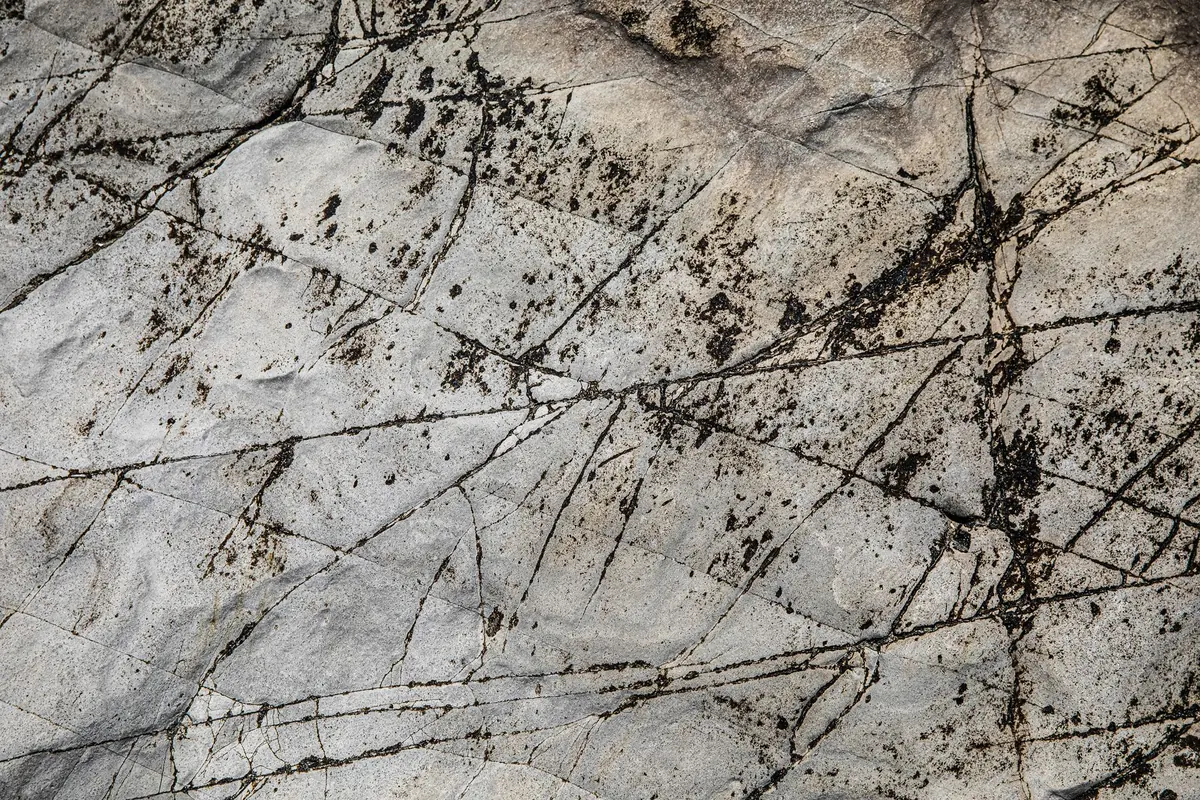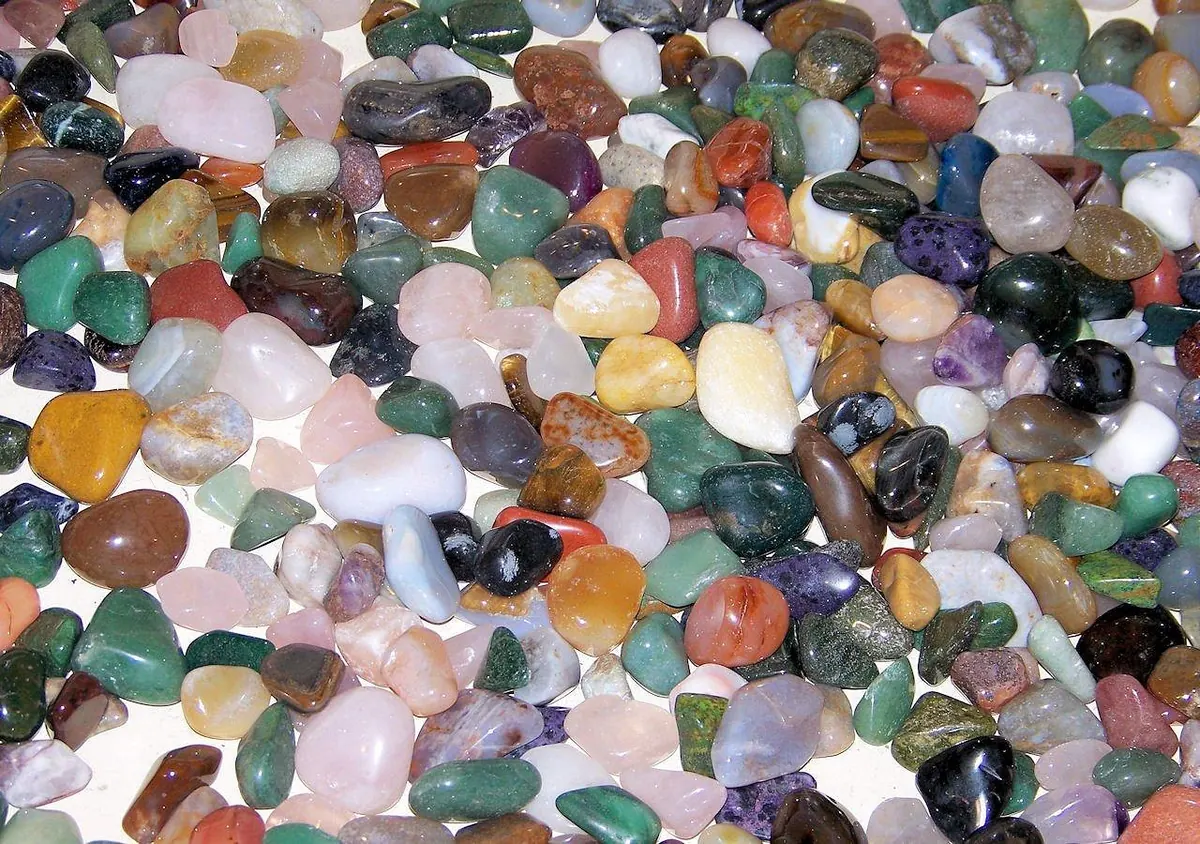
Britain is not a country you associate with big gem crystals, yet quartz turns up almost everywhere you look: in the granite of Cornwall, on the beaches of Angus, in the peat-stained burns of the Cairngorms and in the grey veins threading through the Pennines. Much of it is dull white material you would walk past without a second glance. Some of it is genuinely lovely. Telling one from the other comes down to a few visual clues, and once you know them you will start noticing quartz in places you had never thought to look.
Milky Quartz: The Workhorse of British Veins
Milky quartz is the variety you will meet first, whether you are looking for it or not. It is opaque to semi-translucent white, sometimes with a faint greasy sheen, and it forms the bulk of the gangue — the waste mineral — in the veins worked for tin, copper and lead across Cornwall, Devon, the Pennines, the Peak District, mid-Wales and the Southern Uplands.
You will find it as thick white ribs in cliff faces, as loose blocks on old spoil heaps and as rounded pebbles in streams draining abandoned workings. Freshly broken faces are bright and glassy; weathered surfaces go chalky grey. Look at how it breaks — curved, shell-like surfaces, no flat faces anywhere.
Distinguish it from calcite, the mineral it most often sits beside. Calcite is much softer (a copper coin will scratch it), splits into neat rhombic blocks, and fizzes under a drop of dilute acid. Milky quartz scratches a steel knife and does neither.
Smoky Quartz and the Cairngorm
Smoky quartz runs from a pale tea-brown through to a deep, near-black brown. The colour comes from trace aluminium in the crystal structure, altered over long periods by natural radiation from the surrounding rock. In Britain it is most often found in granite cavities and in veins cutting granite — in the Cornish and Devon granites, in the Lake District, and above all in the Scottish Highlands.
Cairngorm is the traditional Scottish name for the yellow-brown to smoky quartz of the Cairngorm Mountains. It has been cut for jewellery since at least the Victorian period, set into brooches, kilt pins and the cairngorm-topped walking sticks once worn with Highland dress. Good crystals have deep, even colour and plenty of transparency, and the best came from cavities in the granite, exposed after erosion had stripped the peat and soil back.
A caution about old jewellery. Heat treatment has been used in the trade for a very long time to shift quartz colours, and amethyst turns yellow-brown when heated. A brown stone in an inherited brooch may be a genuine Highland cairngorm, or a treated stone from elsewhere. Colour alone will not settle the question.
Amethyst: Purple, But Rarely Gem Quality
Amethyst takes its colour from iron impurities combined with natural radiation, and British material is generally modest: small crystals, often only partly coloured, lining cavities and thin veins. It turns up in Cornwall and Devon, in parts of Wales, in scattered localities in Scotland and occasionally in the Peak District. Gem-grade British amethyst exists, but it is uncommon and has never been produced commercially.
Recognition is straightforward, since no other common British mineral is that purple, but the colour is usually uneven. Many specimens show a pale, almost colourless base with violet confined to the termination. If you keep a piece, store it out of direct sunlight; amethyst colour can fade with prolonged exposure to strong light and heat.
Rock Crystal: Clear Quartz from Fissures and Veins
Rock crystal is the old name for clear, colourless quartz, and in Britain it comes from two settings. The first is the mineral vein: small, cloudy, sharply terminated crystals growing in vugs in the Cornish and Welsh veins, often barely a centimetre across. The second is the alpine-type fissure, a cavity in granitic or metamorphic rock where crystals grew freely into open space, producing prisms with clean faces and bright terminations. These are best known from the Scottish Highlands, with occasional good examples from Wales and the Lake District.
Good rock crystal is glass-clear and shows the classic habit: a six-sided prism ending in a point, with fine horizontal striations across the prism faces. Those striations are a reliable fingerprint. Fluorite and calcite do not show them, and neither does glass.
Agate, Chalcedony and the Rest of the Family
Not all quartz grows into visible crystals. Chalcedony is quartz in a fine, fibrous form, and agate is chalcedony laid down in coloured bands inside a cavity. Scotland is the classic British source: the volcanic rocks of the Midland Valley and the beaches of Angus, Fife and Ayrshire have yielded agates in greys, reds, whites and blues for centuries, and they still turn up as pebbles after winter storms. Flint and chert, the microcrystalline quartzes of the chalk and limestone, belong to the same family, as do the many jaspers. Rose quartz — pink, massive, opaque — does occur here, mainly in pegmatites, but it is scarce and rarely attractive.
Telling Them Apart in the Field
A few simple checks will separate quartz from its usual lookalikes.
- Hardness. Quartz is 7 on the Mohs scale. It scratches window glass and a steel knife blade. Calcite (3) and fluorite (4) do not.
- Fracture. Quartz has no cleavage, so it breaks with curved, shell-like surfaces. Calcite splits into flat-faced rhombic blocks; fluorite into neat triangular pieces.
- Shape. A quartz crystal is